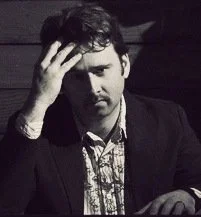
BENEATH THE DIRT FLOOR: EPISODE 02
From 2022-2023, I started writing a podcast about the late, great Chris Whitley. I’m sad to say it never made it beyond the writing phase, so I present my three completed scripts; music excerpts are included for illustrative purposes only.
BENEATH THE DIRT FLOOR:
THE MUSIC OF CHRIS WHITLEY
[INTRO STING]
Welcome to Beneath The Dirt Floor. I’m Nathan Wade, a musician, sound designer, and now podcast host; I also happen to be a devoted fan of Chris Whitley’s music. Maybe you’re hearing of Chris Whitley for the first time, or maybe you’ve been on board for decades; this show is my own small effort to ensure the music never fades away and maybe unearth a few surprises about the creative process along the way. Luckily for all of us, he recorded plenty of music in his too-short life and there’s no better time than now to explore it. So let’s dig in…
[THEME MUSIC]
CHAPTER TWO
Chris Whitley had just returned to New York after a dispiriting chapter in his music career. His efforts to make something of A Noh Rodeo in Belgium had fallen apart and he was now living with his wife Helene and daughter Trixie in New York. While working in a frame factory to help pay the bills, Chris forged ahead with his own personal music that was far more American roots-oriented than beats-per-minute synth pop. Now in 1988, a curious thing had happened since his European travels: blues music was having a revival in the United States. It helped that classic rock became a widely adopted radio format around 1986, so the bands Chris grew up with—like Led Zeppelin, Jimi Hendrix, Creedence Clearwater Revival, and Cream—were repackaged and exposed to a new generation.
This reappraisal benefited the hard rock and metal bands climbing the charts through the back-half of the 80s since they owed a sonic debt to the rock of the 60s and 70s, but now with better distortion pedals and shittier production values. And those classic rock bands? They owed a debt to the blues musicians who influenced them, which meant still-living blues masters like BB King, Buddy Guy, John Lee Hooker, and Albert King shared stages with up-and-comers like Robert Cray, Jeff Healy, Stevie Ray Vaughn, and Gary Moore.
Before I start endlessly listing guitar players, I myself started playing guitar 1986, so there was room in my cassette collection for Joe Satriani’s Surfing With The Alien, Jimi Hendrix’s Greatest Hits, Stevie Ray Vaughn’s Couldn’t Stand The Weather, and Steve Vai’s Flex-Able. At my high school, you were just as likely to see Def Leppard and Motley Crue t-shirts as Hendrix or Led Zeppelin.
This overlapping musical conflagration was best represented in the 1986 movie Crossroads, which bore more than a passing resemblance to Karate Kid, even starring Ralph Macchio and swapping cranky sensei Pat Morita for cranky harmonica player Joe Seneca; karate was swapped for blues and the All Valley Karate Tournament became a guitar duel with higher stakes than a big-ass trophy: the very souls of the student and mentor.
The movie’s Macguffin is a mythical lost Robert Johnson song and Julliard-trained classical guitarist Eugene, played by Macchio, goes on a road trip with Seneca’s Willie Brown, who maybe sold his soul to the devil. What made the biggest impression on me as a fledgling guitarist was the final “head cutting” duel featuring none other than guitar virtuoso Steve Vai, about to break big with David Lee Roth’s Eat ‘Em and Smile album; in Crossroads, he fittingly played Jack Butler, the supernatural axe-slinger for the Devil.
In the climax, an increasingly un-bluesy throw-down erupts between Eugene and Jack. All hope is nearly lost for our hero until he unleashes an extended, jaw-dropping piece of guitar mastery. No, it wasn’t blues that saves the day, but Julliard—and a neo-classical, Paganini-inspired piece of guitar shredding. Yngwie Malmsteen rejoiced while Skip James wept.
The movie may not be a classic, but it fed the flames of blues mythology, of going down to the crossroads and selling your soul. And by 1990, The Complete Works of Robert Johnson was released by Columbia, selling a million copies. I don’t know what Chris thought of this brave new recycled world, but he was about to be an accidental beneficiary of the times. And though the notion that Chris was a “blues” musician became a point of contention, his stylistic quirks and boot-stomping, slide playing with a resonator guitar was bound to go over better with listeners than it did during his first go-round with the New York City music scene.
Thanks to the Rashomon effect, there are multiple versions of Chris’ fateful meeting with a certain Canadian producer—some of which include a show at the Mondo Cane club, others involve Chris either playing indoors at Exterminator Chili or busking outside—but the most reliable chain of events come from photographer Karen {CUE-inn} Kuehn. She simply saw Chris Whitley playing music—who cares the location—and loved what she heard. Rather than a monetary donation, she left the most fateful tip of all time: a note “good for one free photo shoot”; when you’re trying to restart your music career in New York City, it was an offer Chris gladly accepted.
Karen’s ulterior motive was to introduce Chris to her friend (romantic partner even?) who was none other than Canadian musician and recording engineer Daniel Lanois, a big deal as of late after producing Peter Gabriel’s So and U2’s The Joshua Tree. Karen invited Daniel along to the photo shoot in hopes the two musicians would hit it off and her instincts were correct. Daniel was so impressed with Chris’ songs and voice that he invited him to visit his house/studio in New Orleans, not only for the change of pace, but to nudge a wildly talented individual towards life beyond a frame shop and basement apartment.
This live-in studio was, of course, Kingsway and the place was a literal mansion in the French Quarter of New Orleans. Bob Dylan’s Oh, Mercy, the Neville Brothers’ Yellow Moon and even Lanois’ own debut album Acadie were recorded in various locations around the city, but done so by hauling recording equipment from one un-glamorous place to the next. It was time to pick a spot and create a true local studio.
Originally built in 1848, Kingsway had been discovered by engineer Mark Howard in disrepair and bought on the cheap. After some serious renovations, this budding studio became a place to hang out, to live, and most importantly: to make music. Over the years, the studio boasted a roster of artists whose albums were recorded, in whole or in part, there like Afghan Whigs, Ani DiFranco, Pearl Jam, Iggy Pop, R.E.M., Neville Brothers, Sheryl Crow—the list goes on longer than you want to hear.
Most importantly, it brought us the recording of Emmylou Harris’ Wrecking Ball, one of my all-time favorite albums that sits proudly alongside Living With The Law…though not alphabetically; I’d never file my records like that.
[beat] One of the most notable features of Kingsway was the lack of separation between the recording area and the mixing desk. There was no “glass” or barrier between artists, engineers and producers and no need for the talk-back mic, so it allowed an intimate atmosphere and was built for efficiency. If you’ve ever been in a conventional recording studio, there are moments where let’s say you, the musician, are sequestered and surrounded by microphones, deep in your own little performance world while the machines and their handlers are up there shoveling sonic coal in the other-space. A tinny voice may startle you, perhaps through a loudspeaker or right in your headphones, with news that—
DROLL TALKBACK VOICE: “The last take was bullshit; let’s do it again.”
Occasionally there’s furious commotion behind the glass leaving you to wonder what fresh hell is next, only to be alerted that you were, in fact, brilliant and that last take was a thing of beauty—
DROLL TALKBACK VOICE: ”…So let’s do it again.”
Based on an extensive 1991 interview with Rolling Stone Magazine, Chris reminisced about this period, splitting time between New York City with his family and New Orleans where he would stay at Kingsway, doing odd jobs around the studio and getting acclimated to the new locale; given his itinerant history, this part was probably easy. It didn’t hurt that Lanois, and house engineer Mark Howard, were hip-deep into motorcycle culture and Kingsway boasted a harem of two-wheeled sex-machines to ride. You’d likely catch one of the Kingsway artists—including Bob Dylan—riding around the city streets in the late 80’s and early 90’s.
[beat] The next order of events is a little fuzzy, but Chris was introduced to another one of Kingsway’s resident recording engineers and musician named Malcolm Burn. After Malcolm heard a demo of Chris’ music, he was on board and wanted to record with him. Not only were he and Chris the same age, but Malcolm was less intimidating than the seasoned Lanois—and somewhere in there, Daniel was surely out of the country on his own white-knuckle ride with Brian Eno and U2; the band started recording in Germany just after the fall of the Berlin Wall, laboring over their impending rebirth on Achtung Baby.
Note, there was likely a pragmatic reason that Chris and Daniel never recorded together: as time would prove, Chris possessed a near-supernatural stubbornness and—I’m speculating, here—he didn’t want to test his friendship with Lanois in an artistic clash of wills. This is even more understandable if you’ve read about Daniel in Bob Dylan’s memoir Chronicles and the infamous guitar smashing incident during the Oh Mercy sessions. While Daniel was a Zen-like master when it came to letting art to occur naturally, he also had a volcanic temper in high pressure situations. And if Bob Dylan thinks you’re a loose cannon, well… [beat] So, Malcolm was the path forward and, depending on who you ask, he’d prove to be the perfect choice.
At the 1990 Jazz Heritage Festival in New Orleans, Chris acted as guitar tech for Lanois’ band and later, at a huge after-party, he was introduced to music publisher Kathleen Carey. It’s a little vague what music he passed on to her—either earlier demos or the first handful of tracks Chris and Malcolm recorded—but on her return to L.A., she had that music playing while driving on the freeway. In the Dust Radio documentary, Kathleen tells us she was so taken by what she heard that she pulled off the freeway to make a call; keep in mind this is the early 90’s, so you couldn’t just ask Siri or Alexa to dial up Daniel Lanois.
SIRI VOICE: Did you mean…Danny Yell Lay Noise?
No, dammit, I did not. I imagine we’re talking car phone here, so with Chris’ voice commanding the car stereo—traffic ripping by and rocking the car—Kathleen is trying to connect with Daniel, and sends the last few rocks down the mountain that starts an avalanche.
In short time, a showcase at Ludlow Street Café in New York City was arranged and A&R guys, label heads, and music managers were showing up in droves. A classic bidding war erupted as Chris’ reputation grew and Columbia Records was the victor. [beat] Columbia was home to artists such as Bob Dylan, Bruce Springsteen, and Miles Davis—and for fans of symmetry: Johnny Winter’s debut album featuring “Dallas” was also on Columbia—so Chris was easily attracted to the legacy of the label and had a champion in Danny Ienner {EYE-nurr}, who was also its president. Soon Chris had manager Danny Heaps representing him out of L.A. and the stakes were getting higher. But while all the career maneuvering was escalating in the background, a full album was crafted in low-key fashion in New Orleans, the vibe of Kingsway mansion—and the assembled musicians—influencing the performances.
[Clip of the song “Living With The Law” begins and underscores the next bit of dialogue]
CHAPTER THREE
Living With The Law was produced and mixed by Malcolm Burn, with additional recording by Mark Howard and assisted by Wayne Lorenz. Members of the Lanois’ touring band would form a musical foundation for the album, with Bill Dillon on guitar and pedal steel, Ronald Jones on drums, Daryl Johnson on bass and Malcolm Burn on keyboards.
LIVING WITH THE LAW
The title track is a great start to the album, using simple elements to build something cinematic. Those two similar guitar lines at the top wind over and around each other until “The Voice” comes in and hooks you. I’d never noticed before how Chris’ breathing is a part of his singing performance throughout this album. The breaths in between vocal lines are typically chopped out of modern recordings, or at least minimized; here, they’re frequently left in and prominent.
As for the lyrical content: in interviews, Chris has talked about that basement apartment where he and his family were living in New York back in 1988. He’d see drug dealers on his block and empathized with immigrants who had to sell drugs to support their families. Filtered through his imagination and travel history, it becomes a very rural experience, reflecting on a simpler world left behind, maybe written as a letter to someone. But, you know, I’ll let you keep your own interpretation of the song since it’s as evocative as it is ambiguous.
BIG SKY COUNTRY
In a Melody Maker interview, Chris mentions the song “Big Sky Country” drew inspiration from the end of ‘Wuthering Heights’ (possibly the 1939 movie version) where Cathy and Heathcliff, after their messy and tragic lives have both ended, are reunited as ghosts.
It’s also not until the end of the song—and for nearly a fully minute—that we get our first taste of Chris Whitley’s resonator guitar playing.
I’ve had some misconceptions about this song, and it’s all been thrown to the wind after doing my homework. It sounded very…adult contemporary? It’s “slick” and sentimental compared to most of the songs that follow and made me wonder if this was a case of a misguided record exec demanding a single. The song actually predates the Law sessions and was one of the post-Noh Rodeo demos recorded in Belgium; there’s a home recorded 4-track version out there (hat tip to {Yawn VAN-Mark} Jan VanMarcke) that changed my perspective:
Somewhere, Chris has been quoted as calling it his “big fake Prince song” and I wasn’t getting that all until hearing this…
Instead of a slide guitar outro, we get an extended, improvised rap. Some early concerts still found Chris singing about a little picnic lunch on a cloud somewhere, but the song shed most of its Prince-ly, second skin as it passed through Kingsway. According to Malcolm Burn, the foundation of the album version was this very demo with additional overdubs including live drums and lead vocals. I now hear this as the only track to share obvious DNA with Noh Rodeo and in that light, it’s no wonder it sounds more commercially slick than the rest of the album.
KICK THE STONES
That’s “Kick the Stones” with Peter Conway on harmonica—and I’ve seen Peter’s name associated with A Noh Rodeo, so that likely explains the connection. The song’s lyrics feature some of Chris’ most sexual and evocative imagery; he almost tells you what it’s all about but leaves enough space to let your imagination run wild. And how to explain “a ghost town with a gold mine/a pick axe in my head” or “eyes on my lever now/she paint with chili sauce.”
It’s a great track and would have stood out on 90’s radio regardless, but it didn’t hurt the album or Chris’ career that it featured prominently in Ridley Scott’s Thelma & Louise. The story is, Scott heard a demo or early version of the track—prior to Chris being signed to Columbia—while in pre-production . In the final cut of the movie, the song slips in during foreplay and rises to the occasion for drawer-rattling hotel sex between Geena Davis and…some newcomer named Brad Pitt.
MAKE THE DIRT STICK
{AHH-lun GAY-vurt} Alan Gevaert makes his only credited appearance as bassist on “Make The Dirt Stick”; Alan, of course was part of A Noh Rodeo and Chris’ brother-in-law. He would play bass for the supporting tour and perform on Din of Ecstasy.
This is one of my favorite songs on the album (and in general). I’m a sucker for a slow burner and Chris’ phenomenal slide guitar work here inspired teenage me to double down on my own slide playing; it probably did for me what Johnny Winter’s “Dallas” did for Chris way back when.
You know, this also seems an ideal song to talk about intentional dissonance—or playing the wrong notes at the right time.
Chris has spoken of Thelonious Monk’s influence on his music, and this could be one such moment. Monk used melodies and chords that should be considered wrong by most measures, but he does it with such defiant intent that it works. Take, for example, this trio version of “Monk’s Dream”:
…Or “Well You Needn’t” with his septet on the album Monk’s Music:
(I love those obtuse piano interjections in response to the melody.)
Chris often smuggled some “ugly beauty” into his own songs and this melodic rebellion would escalate over the years, so keep your ears peeled and get out your Dissonance Bingo Cards.
POISON GIRL
“Poison Girl” is the only song to feature Daniel Lanois on the album and I’m pretty sure he plays the brief guitar solo before the vocals arrive; it at least sounds like him. However, Deni Bonet is credited as playing viola on the track and I don’t hear anything that sounds viola-like. Is that her playing the second solo but with a heavily distorted viola?
No way—I’ve been a fan of Daniel’s guitar playing long enough to know his tone and phrasing. And it seems odd to have a high-profile guest on a track only to feature him for about 10 seconds at the beginning of the song. Which leads to another curious thing that never occurred to me until now: there’s an instrument that sounds like a distorted electric viola or violin filling out the soundscape on “Living With The Law,” but no mention of it in any liner notes I’ve seen.
You can even hear the “kuh-chucka, kuh-chucka” spicatto of a bow hitting strings and a rapid tremolo effect again at the end. That’s Deni Bonet, right? I think the liner notes gave her credit on the wrong song. Only those who made the album can say for sure, but it’s a sign of great production when, 30-plus years later, the album is still yielding audio surprises.
Aside from those little puzzlers, “Poison Girl” makes perfect sense as a single and, in my opinion, better represents Chris’ songwriting—and the album in general—than “Big Sky Country.” Plus, it smuggles in some seedy darkness and lyrical grime, all delivered in a pleasing shape for the benefit of commercial radio. And speaking of radio…
DUST RADIO
If you were listening to this on cassette in the 90’s like me, you knew “Dust Radio” was the end of side one. Score: 1 for the Luddites! And it’s a damn fine way close out the first half with some of Chris’ most evocative lyrics yet with talk of the Secret Jesus and the good red road. Lines like “she use my body like a carrion crow” and “baby paint skulls and constellations on the ground” have stuck with me since I’ve first heard them.
I’m not sure who’s playing the guitar solo at the end. It sounds a little like Chris’ brother Dan Whitley, but he’s only credited on “Long Way Around”, so Bill Dillon or Chris?
I’ve also been unable to come up with any info on that radio sermon that’s tuned in during the outro, aside from being about David—and I’m assuming we’re talking the Biblical David—nor do I recognize the gospel song that fades in for the reprise.
——————-
[UPDATE: Since I first wrote this script, there’s new information about the gospel song for the curious. Fans have been trying to figure out it’s origin for 25 years (or more), and the song’s name is either “Rise Again” or “I’ll Rise Again.” From my perspective the artist remains unknown since neither track posted in the All Things Chris Whitley article resemble the piece from “Dust Radio”: the first sounds too contemporary with a singer who possesses as much soul as Lawrence Welk; the second gets closer, but has a different lead singer and is missing the higher register backing voices.]
——————-
These extra touches could have been happy accidents rather than sound design choices, but I do like that the song “Dust Radio” seeps back in as if it, too, was part of some bygone broadcast from another time and place. There’s also a radio interview with Malcolm Burn where he mentions the influence of Pink Floyd’s 1975 album Wish You Were Here—in particular, that transistor radio transition between “Have A Cigar” and the title track—and it adds that perfect extra touch to the end of Side One.
[distracted] Just a second…
[Sound of fast-forwarding a cassette and flipping over to Side 2]
Aaand…[play button clicks]…here we go—
PHONE CALL FROM LEAVENWORTH
Here’s Chris in solo, boot-stomping glory on “Phone Call From Leavenworth” with a major hat-tip to Johnny Winter’s “Dallas.” I suppose if you were lucky enough to hear Chris before 1991, you likely expected much of the album would sound like this song. I had no preconceived notions, so I was caught off guard by something so bare-bones and raw and an effective way to start Side 2.
Chris has mentioned this as another song originating from his Belgium years, so he’s imagining life in a U.S. prison while missing home—and for him, “home” is kind of a nebulous concept—and he even name-checks New York City for a little biographical spin. It’s more straightforward lyrically than other songs on the album, but still pivots on the “creative prison” metaphor with plenty of vivid images that elevate this track and makes it so re-listenable.
I FORGET YOU EVERY DAY
“I Forget You Every Day” is another one of my favorites on the album and it must be the contrast of nostalgic memory and bleak imagery that haunts me; it ties into that mournful photo of Chris at the screen door from the album’s artwork. The words are emotionally intense, but his understated, almost detached delivery is chilling when he sings, in his ghostly falsetto, about “starving in some trailer home” and then slides down to his growling chest voice to “burn it down/burn it where you lay.”
It becomes clearer with each track that Chris is a lyrics-forward songwriter, and the music is a delivery system for his poetic aspirations. The “delivery system” in this case taps most deeply into the Daniel Lanois School of Sound: echoey, reverb drenched electric guitars, spare percussion down the middle, and a wide open, spectral sonic space anchored by what sounds like piano through vibrato or tremolo. The resonator guitar and Chris Whitley’s voice still shine through, no matter how dense the production, to create a truly memorable track about forgetting the past.
LONG WAY AROUND
About thirty seconds into “Long Way Around,” I knew I’d be listening to the album a second time in one sitting. I couldn’t believe how each track was as good—if not better—than the last. And then this happened and I was in guitar heaven:
That’s Chris’ brother Dan Whitley playing lead. Coming to this album from my metal-head youth and Hendrix fandom, I could easily get behind Dan’s bad-ass lead guitar work. I’ve yet to find a live version that captures the bottled lightning of this track, but damn what a glorious surprise to have in the final stretch.
LOOK WHAT LOVE HAS DONE
Aside from “Phone Call From Leavenworth” (which was all about mic placement and room ambience), “Look What Love Has Done” is the most subtle production on the album. It’s also sentimental and sweet compared to some of the darker lyrics that came before.
This is a necessary respite in the album sequence to hose down the preceding barn-burner, and it is a great song. It never rose to the heights of my personal favorites from Chris—maybe it seems slight compared to the songs that surround it? Or maybe my heart is three sizes too small? Nevertheless, it’s nice to take a breath before we send this album into the setting sun.
BORDERTOWN
“Bordertown” is that spectacular send-off song. The implied story in the lyrics feels like a continuation of the title track, building out the details of the album’s fictitious world. There’s no shortage of great lines, but one of my favorites refers to “the Naugahyde law and the liquor shark, the networks and the new machines” (hey! which would also be a title to a song in the works). The chorus vocals are booming with a heavy reverb, giving the concept of the border town in question an ominous, all-consuming feel that implies both an actual place and a spiritual crossing.
A great, cathartic build leads to an extended drum and percussion outro. They leave the audio rolling until…
[song stops]
[beat] And there you have it…
That is Chris Whitley’s debut album Living With The Law.
Danny Ienner and Columbia Records were ecstatic with the results—it was a tremendous statement—and the PR machine went into overdrive to push this [ahem] “new Robert Johnson” through to the masses. It began to rack up the kind of critical acclaim any new artist would, in theory, dream of having. But the lights were shining down a little too brightly and at the end of any sales report, a record company has got to move units to reap the financial rewards. What they never asked was: is Chris ready for this kind of attention and pressure? Is the world ready for a blues singer-songwriter who was too complex to be either of those things?
There was trouble on the horizon but in the upcoming episodes of Beneath The Dirt Floor we’ll explore the four years after Living With The Law, years that were less a gap and more like a chasm that shaped the arc of Chris Whitley’s time with Columbia Records. Until then, I’m Nathan Wade and I thank you for listening to Beneath The Dirt Floor.
[OUTRO MUSIC]
LISTENING ROOM
The Crossroads (1986) soundtrack was a curious beast. Though it features some killer slide guitar from Ry Cooder (who also arranged and composed the music), its production turns on a dime from sounding timeless to sounding totally 80s. Conspicuously absent from the official soundtrack was the head-cutting duel at the movie’s climax. It’s essentially Ry Cooder vs Steve Vai and damn good in my opinion, even as a product of the era. I found the whole 10 minute sequence on YouTube (of course!), so here you go:
And here’s the official full album version of Living With The Law. I’ll have more to say about the music videos included on YouTube in the next episode.